
High Jump Strategies for Every Skill Level: Optimize Your Technique and Performance
High jump is a dynamic and technical track and field event that requires a combination of speed, strength, technique, and mental focus. Whether you're just starting out or looking to refine your advanced skills, having high jump strategies tailored to your current ability level is crucial for improvement. This article delves into high jump strategies for different skill levels, providing expert techniques and progression methods to help athletes maximize their performance and achieve their jumping potential.
The beauty of high jump lies in its apparent simplicity but underlying complexity. While the objective—clearing a horizontal bar set at measured heights without dislodging it—seems straightforward, achieving excellence demands meticulous attention to numerous technical elements. What works for an Olympic athlete won't serve a high school beginner, which is why understanding level-appropriate strategies is essential for continuous improvement.
Whether you're aiming to master the basic Fosbury Flop technique or fine-tune an already impressive jump, this comprehensive guide offers skill-specific approaches to elevate your performance. By recognizing where you currently stand and implementing the right high jump strategies for your level, you'll create a clear pathway to reaching new heights—literally and figuratively—in your high jump journey.
High Jump Strategies for Novice Jumpers
Beginners in high jump need to focus on building fundamental skills before attempting complex techniques. The initial phase of high jump training should emphasize proper form over height. Many novice jumpers make the mistake of trying to clear impressive heights before mastering the basics, which often leads to poor technique habits that become difficult to correct later.
Proper sprint mechanics form the foundation of a successful high jump. When learning effective high jump strategies, beginners should start by practicing straight-line sprinting, focusing on proper posture, arm movement, and foot placement. The approach run in high jump requires controlled acceleration rather than maximum speed, so novices should practice gradually building momentum over a short distance.
The approach pattern for beginners should start simple. A straight approach of 5-7 steps is sufficient for novice jumpers to practice timing and rhythm. Once comfortable with a straight approach, beginners can progress to a modified J-shaped approach with 5-7 steps, which begins to introduce the curved path necessary for the Fosbury Flop technique without overwhelming the athlete with complexity.
Takeoff mechanics deserve special attention for beginners. The plant foot should be placed approximately 2-3 foot lengths away from the standard (the vertical support holding the bar), with the takeoff leg nearly straight but maintaining slight flexibility in the knee. Coaches should emphasize an upward drive of the non-takeoff leg (free leg) to create rotational momentum. A common mistake among beginners is leaning back too early, which reduces forward momentum and limits height potential.
Developing basic strength and power through appropriate exercises helps novice jumpers build the physical foundation necessary for successful jumping. Basic plyometric exercises like ankle hops, box jumps (starting with low heights), and medicine ball throws help develop the explosive power required for takeoff without overly stressing the joints.
Body awareness exercises such as gymnastics-inspired movements can help beginners develop the spatial awareness needed during the flight phase of the jump. Simple drills like forward rolls, backward rolls, and basic tumbling help jumpers become comfortable with their bodies in different orientations, which is crucial for the rotational elements of high jump.
- Focus on developing proper sprinting mechanics to generate speed
- Learn the fundamental approaches and takeoff positions
- Incorporate basic plyometric exercises to enhance explosiveness
Intermediate Techniques to Elevate Performance
Intermediate high jumpers have mastered the basics and are ready to refine their technique to achieve greater heights. At this stage, athletes should focus on optimizing each phase of the jump while introducing more complex training elements to enhance overall performance.
Timing and rhythm become increasingly important for intermediate jumpers. One effective method to improve these aspects is incorporating hurdle drills into training sessions. Setting up 3-5 low hurdles at consistent intervals and practicing maintaining a steady rhythm while clearing them helps jumpers develop the coordination needed for a consistent approach. The last few steps before takeoff should follow a rhythmic pattern of quick, decisive foot contacts that prepare the body for explosive upward motion.
The curved approach is a defining feature of modern high jump technique, particularly for the widely used Fosbury Flop method. Intermediate jumpers should now focus on perfecting their J-approach, typically consisting of 8-10 steps with the last 4-5 steps occurring on a curve. The curvature creates centripetal force that aids in the rotational movement necessary for proper bar clearance. Athletes should practice maintaining speed through the curve without losing form or leaning excessively inward.
Takeoff mechanics can be refined by focusing on the specific angles and positions that maximize vertical lift. Intermediate jumpers should aim for a takeoff angle of approximately 45-50 degrees, which balances horizontal momentum with vertical lift. The plant foot should be placed precisely, with attention to both distance from the standard and orientation (slightly turned in toward the bar). Video analysis becomes particularly valuable at this stage to identify and correct subtle flaws in takeoff positioning.
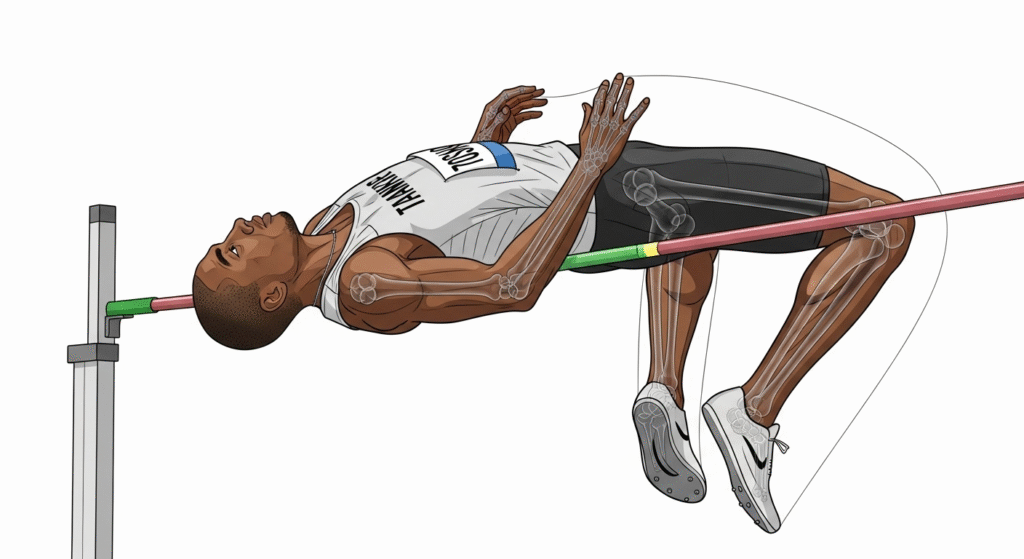
When implementing intermediate high jump strategies, athletes must pay special attention to body positioning during the flight phase. The back should arch naturally over the bar, with hips high and head relaxed. Premature hip lifting is a common issue that can be addressed through specific drills focusing on timing the hip thrust to coincide with the peak of the jump.
Strength training for intermediate high jumpers should become more specific, targeting the muscle groups most critical for performance. Single-leg exercises like lunges, step-ups, and single-leg squats develop the unilateral strength needed for takeoff. Core stability work becomes increasingly important as it contributes to maintaining proper body position during the arch over the bar. Exercises like planks, Russian twists, and medicine ball work help develop the necessary core control.
Periodization of training becomes relevant at the intermediate level. Athletes should structure their training to peak for important competitions, balancing high-intensity technical work with adequate recovery periods. This approach prevents burnout and reduces injury risk while maximizing performance when it matters most.
- Incorporate hurdle drills to improve rhythm and coordination
- Work on optimizing the takeoff angle and body positioning
- Implement strength training focused on lower body and core stability
Advanced High Jump Strategies for Peak Performance
Advanced high jumpers operate at a level where marginal improvements make significant differences in performance. These athletes must focus on fine-tuning every aspect of their technique while implementing sophisticated training methods to maximize their capabilities.
Biomechanical analysis becomes a critical tool for advanced jumpers seeking to optimize energy transfer throughout the jump. Using force plates during takeoff can provide data on ground reaction forces, allowing coaches and athletes to identify inefficiencies in force application. High-speed video analysis from multiple angles helps pinpoint subtle technical flaws that might be invisible to the naked eye. Advanced jumpers should review their technique regularly, making micro-adjustments to approach speed, curve tightness, and takeoff mechanics based on this data.
Approach customization is essential for advanced jumpers, as the generic approach patterns suitable for beginners and intermediates may not maximize an individual's strengths. Elite jumpers typically use 10-12 steps with a precisely calculated curve radius that complements their height, speed, and strength characteristics. The approach should be so consistent that the athlete can hit the same takeoff spot within centimeters on consecutive jumps. Many elite jumpers use markers on the track to ensure consistency, with some developing personalized measurement systems to recreate their optimal approach at different facilities.
When considering advanced high jump strategies, athletes must master the complex relationship between horizontal velocity and vertical impulse. Too much speed can diminish an athlete's ability to generate sufficient vertical force, while too little speed reduces the energy available for conversion to height. Advanced jumpers should experiment with slight modifications to their approach speed to find their personal optimum, which may change as their strength and technical proficiency evolve.
Bar clearance techniques require meticulous attention at the advanced level. The timing of each body segment's movement over the bar should be sequenced to minimize the center of mass height needed for successful clearance. Advanced jumpers should focus on relaxing shoulders and neck when the head passes the bar, maintaining a deep arch through the torso, and timing the leg kick to coincide with the hips clearing the bar. Some elite jumpers utilize visualization and mental rehearsal techniques to program ideal movement patterns into their neuromuscular system.
Sport-specific conditioning becomes increasingly important as jumpers advance. Training should include plyometric exercises that closely mimic the force production patterns of high jumping, such as depth jumps from specific heights and single-leg bounding drills. Strength work should emphasize not just maximum strength but also rate of force development, as the takeoff in high jump occurs in approximately 0.15-0.2 seconds. Olympic lifting variations and explosive medicine ball throws can help develop this quality.
Periodization grows more sophisticated for advanced jumpers, with training plans often spanning entire competitive seasons or even Olympic cycles. Microcycles, mesocycles, and macrocycles should be carefully structured to ensure peak performance at major competitions while maintaining technical sharpness throughout the competitive season. Recovery modalities like contrast therapy, massage, and proper nutrition become essential components of an advanced jumper's program, ensuring that the body can handle the intense training loads necessary for elite performance.
- Analyze and adjust biomechanics for optimal energy transfer during the jump
- Utilize video analysis to identify and correct minor technical flaws
- Engage in sport-specific conditioning to maintain peak physical condition
Conclusion
Mastering the high jump requires implementing high jump strategies tailored to an athlete's current skill level. By focusing on foundational techniques for beginners, refining performance for intermediates, and perfecting advanced strategies, jumpers can systematically enhance their abilities and achieve greater heights. Implementing these skill-specific methods and maintaining a structured progression will not only optimize performance but also foster long-term success in the high jump.
The journey from novice to advanced high jumper is marked by distinct technical milestones that build upon one another. Beginners who invest time in mastering proper sprint mechanics, basic approach patterns, and fundamental takeoff positions establish a solid foundation that supports future development. Intermediate jumpers who refine their rhythm, optimize body positioning, and incorporate targeted strength training prepare themselves for advanced technical work. Elite jumpers who analyze biomechanics, customize their approach, and implement sophisticated training methods can achieve the marginal gains that separate good jumpers from champions.
Performance plateaus are inevitable in any athletic endeavor, but they can be overcome through systematic assessment and adjustment of training methods. By regularly evaluating progress against carefully selected benchmarks, athletes and coaches can identify areas needing modification and implement appropriate changes. This data-driven approach to progression ensures that training remains effective and efficient throughout an athlete's career.
Perhaps most importantly, understanding high jump strategies for different skill levels allows athletes to enjoy the satisfaction of continuous improvement. By working on level-appropriate skills rather than attempting techniques beyond their current capabilities, jumpers experience regular success that fuels motivation and commitment. This positive reinforcement cycle is crucial for maintaining the long-term dedication required to reach one's full potential in the high jump.
Whether you're taking your first steps on the approach runway or fine-tuning your technique for international competition, implementing the strategies outlined in this article will help you jump higher, perform more consistently, and experience the unique satisfaction that comes from mastering one of track and field's most technical events. By respecting the process and embracing the journey through each skill level, you'll maximize your potential and achieve the heights you aspire to reach.
Ready to Elevate Your High Jump Performance?
Explore expert training guides and skill-level strategies at CoachOtto.Training
Start Training Smarter