
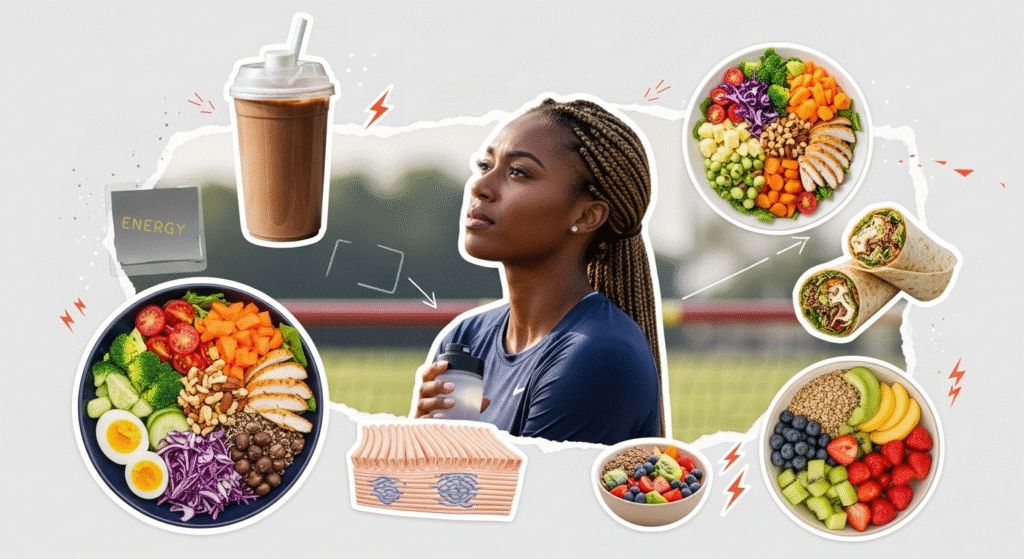
Nutrition for High Jumpers: Fueling Performance Without Overthinking It
You train hard. You're consistent with your approach work, you hit the weight room three times a week, you do your plyometrics. But you're also eating whatever's convenient—grabbing fast food between school and practice, skipping breakfast, relying on energy drinks for a boost.
Your training load is right. Your technique is improving. But your recovery is slow, your energy dips mid-session, and you're not seeing the performance gains your work should be producing. The missing piece isn't more training. It's fuel.
This article covers the nutrition fundamentals for high jumpers: what to eat, when to eat it, and which supplements actually matter. No complicated meal plans or restrictive diets—just practical guidance on fueling performance and recovery.
The Basics: Macronutrients for High Jump
High jump is a power sport. You need explosive force production, which requires energy. That energy comes from three macronutrients: carbohydrates, protein, and fat. Each serves a different purpose.
Carbohydrates: Primary Fuel Source
Carbs are stored in muscles and liver as glycogen. When you sprint down the approach run or explode off the ground at takeoff, your body burns glycogen. Run out of glycogen mid-session, and performance drops noticeably—jumps feel heavy, approach speed decreases, vertical explosiveness diminishes.
How much you need: 4-6 grams per kilogram of bodyweight on training days. For a 70kg (154 lb) jumper, that's 280-420 grams of carbs daily.
Good sources: Rice, oats, potatoes, sweet potatoes, pasta, bread, quinoa, fruit. Focus on whole food sources rather than processed sugars.
Protein: Muscle Repair and Growth
Every jumping session creates micro-tears in muscle fibers. Every strength session breaks down muscle tissue. Protein provides the amino acids needed to repair this damage and build stronger tissue.
How much you need: 1.6-2.0 grams per kilogram of bodyweight daily. For a 70kg jumper, that's 112-140 grams of protein spread across the day.
Good sources: Chicken, turkey, fish, lean beef, eggs, Greek yogurt, cottage cheese, milk, beans, lentils, tofu, tempeh.
Distribution matters: Instead of eating 100g of protein at dinner and almost none the rest of the day, spread intake across 4-5 meals. Each meal should contain 20-30g of protein for optimal muscle protein synthesis.
Fats: Hormones and Energy
Fats support hormone production (including testosterone, which drives muscle growth and power development), protect joints, and provide energy during lower-intensity activities. Don't avoid them.
How much you need: 0.8-1.2 grams per kilogram of bodyweight. For a 70kg jumper, that's 56-84 grams of fat daily.
Good sources: Olive oil, avocados, nuts, seeds, fatty fish (salmon, mackerel), whole eggs, natural nut butters.
Avoid excessive fried foods and trans fats, but don't fear dietary fat. It's essential for athletic performance.
Meal Timing for Training Days
When you eat matters almost as much as what you eat. Your body needs fuel available at specific times to maximize training quality and recovery.
Pre-Training: 2-3 Hours Before
Eat a complete meal containing carbs, protein, and minimal fat (fat slows digestion). This gives your body time to digest and convert food to usable energy.
Example Pre-Training Meals
Option 1: Grilled chicken breast, 1.5 cups white rice, steamed vegetables, small amount of olive oil
Option 2: Turkey sandwich on whole wheat bread, banana, pretzels
Option 3: Oatmeal with protein powder, berries, honey
Why these work: Balanced carbs for energy, protein to support muscle, easy to digest in 2-3 hours
If you train early morning or can't eat 2-3 hours before, have a smaller snack 30-60 minutes before: banana with peanut butter, apple with protein bar, or a simple smoothie.
Post-Training: Within 60 Minutes
This is the most critical nutrition window. Your muscles are depleted and ready to absorb nutrients. Missing this window delays recovery and reduces adaptation from training.
Immediate post-workout (0-30 minutes): Quick-digesting carbs + protein. Protein shake with banana, chocolate milk, or a recovery drink. Target 20-30g protein + 40-60g carbs.
Full meal (60-90 minutes post-training): Complete meal with protein, carbs, vegetables. This restocks glycogen and provides sustained amino acids for repair.
Example Post-Training Meals
Option 1: Salmon, sweet potato, roasted broccoli, quinoa
Option 2: Lean ground beef, brown rice, black beans, peppers and onions
Option 3: Grilled chicken, pasta with marinara sauce, side salad
Why these work: High-quality protein for repair, substantial carbs to replenish glycogen, vegetables for micronutrients and recovery support
Competition Day Nutrition
Don't experiment on competition day. Use the same pre-training meal timing you've practiced all season.
3-4 hours before competition: Familiar meal, moderate-high carbs, moderate protein, low fat. Nothing spicy, nothing that causes digestive issues.
1-2 hours before: Light snack if needed. Banana, granola bar, sports drink. Keep it simple.
Between flights/heats: Small, easily digestible carbs. Fruit, pretzels, sports drink. Don't eat heavy foods that sit in your stomach.
Post-competition: Same post-training protocol. Even if you're tired or disappointed with results, refuel properly. Your body doesn't care about your placing—it needs recovery nutrition.
Hydration: The Most Common Deficiency
Dehydration of just 2% bodyweight reduces power output by 10-20%. For a 70kg athlete, that's 1.4kg (3 lbs) of water loss—easy to achieve through a hard training session in warm weather.
Daily baseline: 3-4 liters of water spread throughout the day. More if training in heat or for extended periods.
During training: Sip water every 15-20 minutes. Don't wait until you're thirsty—thirst means you're already dehydrated.
Hydration check: Urine color. Pale yellow = well hydrated. Dark yellow/amber = need more water. Clear = possibly over-hydrated (rare, but possible).
Electrolytes: For sessions longer than 60 minutes or training in heat, add electrolytes (sodium, potassium, magnesium). Sports drinks, electrolyte tablets, or coconut water all work.
Supplements: What Actually Works
Most supplements don't do much. A few have solid research backing and can provide real benefits for high jumpers. Focus on food first, supplements second.
Tier 1: Strong Evidence, Clear Benefit
Creatine Monohydrate
What it does: Increases ATP availability for explosive movements. Improves power output and training capacity.
Dose: 5g daily, every day. No loading phase needed (though you can load with 20g/day for 5 days to see effects faster).
Research support: Extensive. See position stand on creatine supplementation for comprehensive review.
Cost: Very cheap. $10-15 for 3-4 month supply.
Side effects: Weight gain of 2-5 lbs (water retention in muscles, not fat). Some athletes experience mild GI distress—take with food if this occurs.
Protein Powder
What it does: Convenient way to hit daily protein targets. Not magic, just practical.
Dose: 20-30g post-training, or whenever you need to supplement whole food protein intake.
Type: Whey (fast-digesting, good post-workout), casein (slow-digesting, good before bed), or plant-based blends (pea/rice combo for complete amino profile).
Cost: Moderate. $30-50 for 2-3 weeks worth, depending on quality.
Reality check: You can get all protein from whole foods. Powder is convenience, not necessity.
Caffeine
What it does: Increases alertness, reduces perceived effort, enhances power output.
Dose: 3-6 mg per kg bodyweight, 60 minutes before training or competition. For a 70kg athlete, that's 200-420mg (roughly 1-2 cups of strong coffee or 1-2 caffeine pills).
Timing: Works for 3-6 hours. Don't use daily or you'll build tolerance. Save it for important training sessions or competitions.
Side effects: Jitters, increased heart rate, difficulty sleeping if used too late in day. Start at lower end of dose range.
Tier 2: Some Evidence, Potentially Useful
Beta-Alanine
What it does: Buffers lactic acid, delays fatigue in repeated efforts.
Dose: 3-6g daily, split into 2-3 doses. Take consistently for 2-4 weeks before seeing effects.
Relevance for high jump: Limited. More useful for repeated sprint work than single explosive efforts. May help during high-volume jump sessions.
Side effect: Harmless tingling sensation (paresthesia) in skin. Reduces over time or with smaller doses.
Vitamin D
What it does: Supports bone health, muscle function, immune system. Many athletes are deficient, especially those training indoors.
Dose: 1,000-2,000 IU daily if you get regular sun exposure. 2,000-4,000 IU if mostly indoors. Get blood tested to know your baseline.
Cost: Very cheap. $5-10 for several months.
What to Skip
BCAAs: If you're eating adequate protein, BCAAs add nothing. Save your money.
Fat burners: High jumpers need power, which requires muscle mass. Don't waste time on fat burners. Control body composition through total calorie intake, not pills.
Pre-workout "proprietary blends": Usually just caffeine + beta-alanine + marketing. Buy those separately for 1/3 the price if you want them.
Testosterone boosters: Legal supplements claiming to boost testosterone don't work. If something actually increased testosterone significantly, it would be banned or require a prescription.
Fuel Your Training Properly
The 12-Week Plyometric Plan includes nutrition timing recommendations for each training phase, helping you match fuel intake to training demands across the entire program.
Get the Training PlanBody Composition for High Jumpers
High jump rewards a high power-to-weight ratio. More power helps. Less unnecessary weight helps. But trying to get too lean hurts performance.
What "Lean" Means for High Jumpers
Men: 6-12% body fat typically optimal for high jump. Below 6% often reduces power and increases injury risk.
Women: 12-18% body fat typically optimal. Below 12% risks hormonal disruption and stress fractures.
These are ranges, not targets. Some athletes perform best at the higher end, some at the lower end. Performance in training and competition is the metric that matters, not a specific body fat percentage.
Gaining Muscle (Off-Season)
If you need to build strength and power, you'll need to gain some weight. This requires eating in a calorie surplus—consuming more than you burn.
Surplus size: 200-400 calories above maintenance. Larger surpluses just add fat faster, they don't speed up muscle growth.
Protein: Keep at 1.6-2.0g per kg bodyweight. This supports muscle growth.
Rate of gain: 0.25-0.5 kg (0.5-1 lb) per week. Faster = mostly fat gain.
Timeline: Off-season blocks of 8-12 weeks, then maintain during competition season.
Losing Fat (Pre-Season)
If you're carrying excess fat that's hurting your power-to-weight ratio, controlled fat loss can improve performance. But do it slowly during off-season or early preparation, never during competition season.
Deficit size: 300-500 calories below maintenance. Larger deficits reduce performance and risk muscle loss.
Protein: Increase to 2.0-2.2g per kg to preserve muscle during deficit.
Rate of loss: 0.25-0.5 kg (0.5-1 lb) per week. Faster = muscle loss + performance decline.
Timeline: 6-8 weeks maximum, then return to maintenance. Don't stay in deficit long-term.
Practical Implementation
Nutrition doesn't need to be complicated. Here's a simple weekly structure that covers the essentials.
Your First Week of Structured Nutrition
Day 1-7: Establish Baseline
- Calculate your targets. Bodyweight in kg × 5 = grams of carbs. Bodyweight in kg × 1.8 = grams of protein. Bodyweight in kg × 1 = grams of fat.
- Plan 3 main meals + 2 snacks. Each main meal: palm-sized protein, fist-sized carb source, fist-sized vegetables, thumb of fat. Snacks: fruit + protein source (yogurt, nuts, protein bar).
- Prep 2-3 days at a time. Cook rice, chicken, vegetables in bulk. Portion into containers. This eliminates "I don't have time" excuse.
- Time meals around training. Complete meal 2-3 hours before. Protein shake immediately after. Full meal 60-90 minutes post-training.
- Track hydration. Fill a water bottle in the morning. Finish it by lunch. Fill again. Finish by dinner. That's 2-3 liters minimum.
- Add creatine if you choose to supplement. 5g daily, any time of day, every day. That's the only supplement you need to start.
- Review weekly. Energy during training sessions improved? Recovery faster? Sleeping better? Adjust portions based on feedback.
Don't overthink it. Consistency with basics beats perfect execution of complex plans. Eat complete meals at regular times, fuel training properly, stay hydrated, sleep adequately. Do that for 4-6 weeks and you'll see the difference in how you train and recover.
For related training nutrition strategies, see our guide on managing training load (which addresses energy balance across training phases). For injury prevention through proper recovery, review our injury prevention strategies.