

Sports Science High Jump: High jump is a sport that demands a unique combination of speed, strength, and technique. With the advancement of sports science, athletes now have access to sophisticated tools and methodologies that can significantly enhance their performance. This article explores how integrating sports science into high jump training—through biomechanical analysis, performance optimization, and advanced conditioning strategies—can revolutionize the way athletes prepare and compete, leading to higher jumps and greater athletic accomplishments.
For decades, high jump training relied primarily on traditional coaching methods and the athlete’s natural talent. Today, however, the integration of sports science has transformed this landscape dramatically. By applying scientific principles to training regimens, coaches and athletes can now make data-informed decisions that lead to measurable improvements in jump height, technique efficiency, and overall athletic performance.
Sports science brings precision to high jump training through various disciplines including biomechanics, physiology, nutrition, and psychology. These scientific approaches allow for personalized training programs that address individual strengths and weaknesses, ultimately helping athletes reach their full potential. Whether you’re a competitive high jumper looking to break records or a coach seeking to elevate your team’s performance, understanding how sports science improves high jump athletic performance is essential in today’s competitive environment.
Sports Science High Jump: Biomechanical Analysis for Enhanced Technique
Biomechanical analysis stands at the forefront of sports science innovation in high jump training. This scientific approach examines the physics behind each jump, breaking down the complex movements into measurable components that can be optimized for maximum height and efficiency.
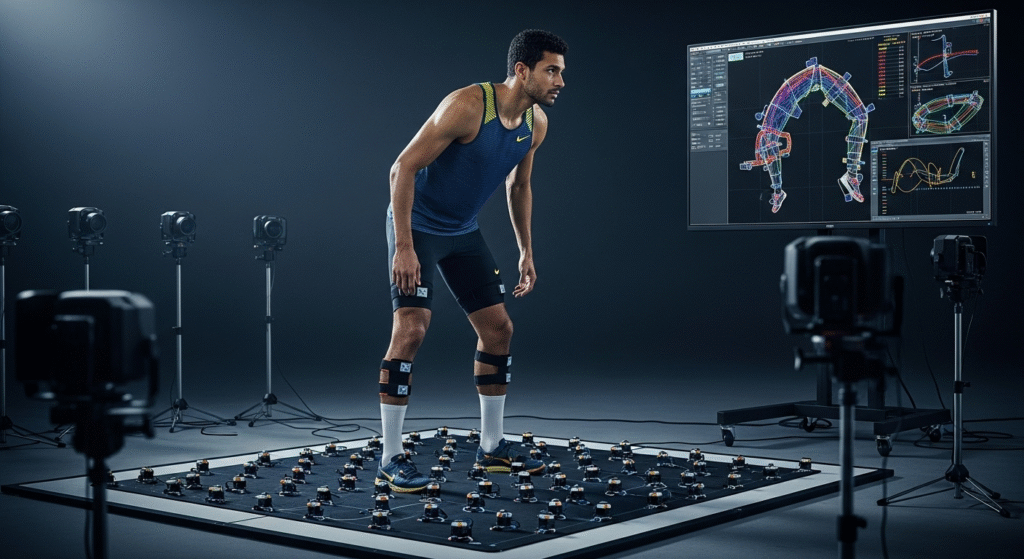
Motion capture technology has revolutionized how coaches and athletes understand the mechanics of high jumping. By attaching sensors to key points on an athlete’s body, these systems create detailed 3D models of the jump that can be analyzed frame by frame. This level of detail allows coaches to identify subtle technical flaws that might otherwise go unnoticed. For example, analysis might reveal that an athlete’s approach angle is slightly off or that their arm position during takeoff is limiting their vertical force generation. These insights, invisible to the naked eye, can lead to significant improvements when corrected.
The takeoff phase of the high jump is particularly critical, as it’s where the horizontal momentum from the approach is converted into vertical lift. Biomechanical analysis can measure the exact forces at play during this crucial moment. By calculating the ground reaction forces and ankle, knee, and hip angles, sports scientists can determine the optimal body positioning for maximum energy transfer. This information helps athletes adjust their technique to achieve the perfect blend of speed and vertical force.
During the flight phase, body positioning dramatically affects clearing ability. Biomechanical analysis tracks the rotation of the body over the bar, the timing of the hip extension, and the positioning of the shoulders and legs. These measurements help athletes understand how to manipulate their center of gravity effectively, allowing them to clear bars that might otherwise seem beyond their physical capabilities. When world-class high jumpers like Mutaz Essa Barshim achieve seemingly impossible clearances, it’s often due to technical perfection informed by such analysis.
- Utilizing motion capture technology to analyze takeoff and flight phases provides insights that are impossible to gather through observation alone, often revealing the millisecond adjustments that separate good jumps from great ones.
- Identifying and correcting technical flaws to maximize height involves detailed analysis of joint angles, approach velocities, and takeoff mechanics that can add crucial centimeters to jump height.
- Optimizing body positioning and energy transfer during the jump requires understanding the physics of rotational momentum and gravity manipulation, which biomechanical analysis quantifies precisely.
Sports Science High Jump: Performance Optimization through Data Analytics
The integration of data analytics into high jump training has transformed how athletes and coaches approach performance enhancement. By collecting and analyzing comprehensive data sets, sports scientists can develop highly personalized training programs that address the specific needs and physical attributes of each athlete, leading to more efficient progress and higher jumps.
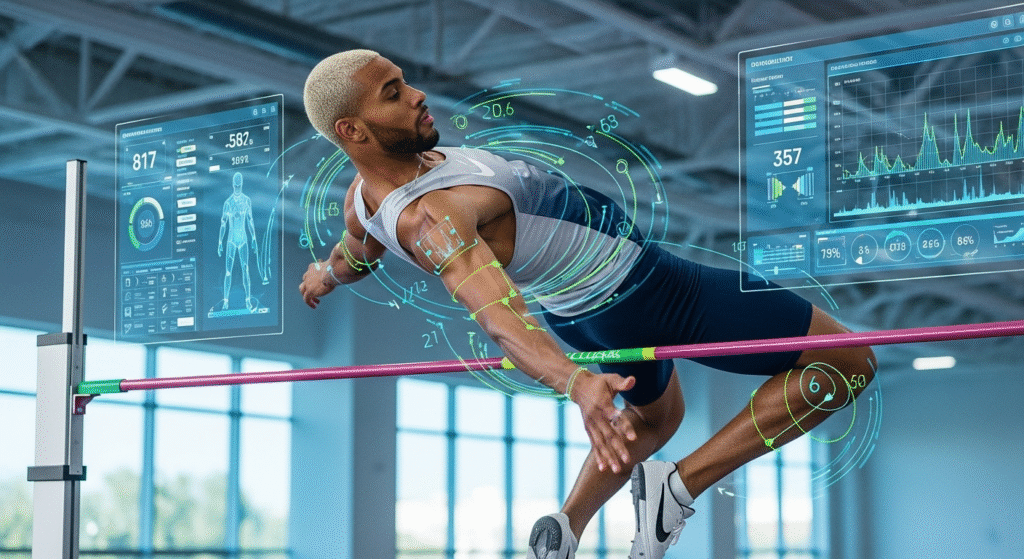
Track and field has entered the era of big data, with high jump being no exception. Modern athletes utilize wearable technology that tracks everything from jump height and approach speed to heart rate variability and recovery metrics. These devices provide continuous feedback that allows for real-time training adjustments. For instance, if data indicates that an athlete’s approach speed is inconsistent, coaches can immediately modify drills to address this issue rather than waiting for competition results to highlight the problem.
Performance data collected over time creates valuable longitudinal insights that reveal patterns and trends in an athlete’s development. By analyzing these patterns, sports scientists can identify which training methods yield the best results for specific athletes. Some jumpers might respond better to plyometric training, while others might see greater improvements from technical work. Data-driven personalization ensures that each athlete’s program emphasizes what works best for their unique physiology and technique.
Predictive analytics represents perhaps the most cutting-edge application of data science in high jump. By analyzing historical performance data alongside physiological markers, sports scientists can now predict fatigue levels, injury risk, and even performance outcomes with remarkable accuracy. This predictive capability allows coaches to adjust training loads proactively, ensuring athletes reach peak condition for important competitions while minimizing injury risk. When implemented correctly, these data-informed decisions can extend careers and help athletes maintain consistency at the highest levels of competition.
- Tracking performance metrics to monitor progress and identify areas for improvement has become sophisticated enough to detect minute changes in technique and physical capability, allowing for precisely targeted training interventions.
- Implementing data-driven training adjustments to enhance strength and agility involves correlating biomechanical measurements with specific exercise outcomes to create truly optimized workout regimens.
- Using predictive analytics to prevent injuries and maintain peak performance levels helps coaches balance training intensity and recovery, especially critical in high jump where the impact forces can lead to stress injuries without proper management.
Sports Science High Jump: Advanced Athletic Conditioning Strategies
Modern high jump performance relies heavily on advanced conditioning strategies that prepare the athlete’s body for the extreme demands of the event. Unlike traditional training approaches that often focused primarily on technique, contemporary sports science emphasizes the development of specific physical attributes that directly contribute to jumping ability and injury prevention.
Plyometric training has become a cornerstone of high jump conditioning because it specifically targets the stretch-shortening cycle crucial for explosive takeoff power. Exercises like depth jumps, box jumps, and bounding drills train the neuromuscular system to generate maximum force in minimal time—exactly what’s needed during the brief takeoff phase of a high jump. Research has shown that properly periodized plyometric programs can increase vertical jump height by 5-15%, a significant margin in a sport where millimeters can determine championship outcomes. However, sports scientists now understand that plyometrics must be carefully programmed based on the athlete’s strength foundation and recovery capacity to avoid overtraining.
Strength development for high jumpers has evolved beyond basic weight room exercises. Today’s conditioning programs incorporate asymmetrical and unilateral movements that better reflect the demands of the event. Single-leg exercises like Bulgarian split squats and lateral lunges develop the specific strength patterns needed for the curved approach and single-leg takeoff. Core stability training has also advanced, with exercises now designed to enhance rotational power and mid-air body control. These targeted strength protocols ensure that every aspect of muscular development directly translates to improved jumping performance.
Flexibility and mobility work has taken on new importance as sports scientists recognize its role in both performance enhancement and injury prevention. Dynamic mobility routines have largely replaced static stretching in pre-training and competition warm-ups, as research shows they better prepare the muscles and nervous system for explosive activity. Techniques like proprioceptive neuromuscular facilitation (PNF) stretching and fascia release work are now regularly incorporated into high jumpers’ recovery protocols. This comprehensive approach to tissue quality and joint mobility allows athletes to achieve optimal body positions during all phases of the jump while reducing injury risk.
- Incorporating plyometric and strength training to boost explosive power requires scientific periodization to ensure peak power development coincides with competition schedules while managing fatigue and recovery.
- Designing flexibility and mobility programs to enhance range of motion and reduce injury risk now includes neurodynamic techniques that improve the nervous system’s control over movement patterns, not just muscle elasticity.
- Utilizing sport-specific conditioning drills to improve overall athleticism and jump efficiency focuses on neuromuscular training that enhances proprioception and coordination specifically for the unique demands of high jump.

Sports Science High Jump: Conclusion
Integrating sports science into high jump training offers a transformative approach to enhancing athletic performance. Through biomechanical analysis, performance optimization, and advanced conditioning strategies, athletes can achieve greater heights and maintain competitive advantages. Embracing these cutting-edge techniques not only improves the technical and physical aspects of high jump but also fosters a deeper understanding of the sport, paving the way for future successes in athletic endeavors.
The evolution of high jump training through sports science represents a significant paradigm shift in how we approach athletic development. By moving from subjective coaching assessments to objective, data-driven methodologies, the ceiling for human performance continues to rise. The remarkable world records we’ve witnessed in recent decades owe much to these scientific advances, proving that the integration of sports science and athletic training yields tangible results.
For coaches and athletes looking to implement these approaches, the journey begins with education and access to appropriate technology. Universities, sports institutes, and even smartphone applications now offer tools that make sports science accessible at various levels of competition. The investment in these resources, while sometimes substantial, typically pays dividends in improved performance and career longevity.
As we look to the future, the relationship between sports science and high jump will likely grow even more sophisticated. Emerging technologies like artificial intelligence for technique analysis, virtual reality for visualization training, and genetic insights for training personalization represent the next frontier. By continuing to embrace scientific innovation while honoring the artistic elements that make high jump such a captivating event, athletes and coaches can push the boundaries of what’s possible in this classic Olympic discipline. The bar, both literally and figuratively, will continue to rise as sports science improves high jump athletic performance in ways we’re only beginning to imagine.